Services
Engineering, design and operational work across the life of a system
Each service below explains what it is, the business need it addresses, the work typically involved and the value it can create. No guaranteed outcomes or performance figures are claimed, because those depend on circumstances specific to each system.

How engagements are shaped
Defined build
A scoped piece of work with agreed acceptance conditions, delivered in stages and concluded with handover.
Continuous work
An ongoing arrangement alongside your team, with priorities reviewed at a regular cadence.
Advisory
A time-boxed review producing written findings, options and recommendations without implementation.
01
Custom software development
Applications built specifically for one organisation's process, rather than configured from a general-purpose product.
- Business need
- Suited to work that does not fit off-the-shelf software: unusual rules, sequences that span several departments, or processes that currently survive on spreadsheets and manual coordination.
- Typical work
- Process mapping, data modelling, architecture definition, iterative implementation with automated tests, review sessions with the people who will use the system, deployment and documentation.
- Potential value
- The software matches how the organisation actually operates, removes duplicate data entry, and records information in a structured form that can later be reported on or connected to other systems.
02
Web application development
Browser-based systems — customer portals, internal tools, dashboards and administrative interfaces — engineered for multi-user, multi-device use.
- Business need
- Appropriate where people need access from different locations and devices without installing software, and where permissions must separate what each role can see and do.
- Typical work
- Interface architecture, authentication and authorisation, server-side logic, database work, responsive front-end implementation, automated testing and release pipelines.
- Potential value
- A single place where a process is carried out and observed, with access control, an activity history, and no dependency on individual machines or local files.
03
Digital product design
Deciding how a product should behave before it is built: structure, flows, states, terminology and priorities across screens.
- Business need
- Useful when requirements exist as a list of features but the shape of the product is unclear, or when an existing product has grown inconsistent as functions were added over time.
- Typical work
- Review of current tasks and pain points, information architecture, wireframes and interaction states, terminology decisions, and a walkthrough of the intended flows before implementation begins.
- Potential value
- Fewer expensive reversals during development, a product that is quicker to learn, and a shared reference that keeps design and engineering describing the same thing.
04
UI/UX engineering
The front-end craft that turns an interface design into accessible, performant, maintainable code.
- Business need
- Relevant where interfaces are inconsistent between screens, where accessibility requirements must be met, or where the front-end has become slow and difficult to extend.
- Typical work
- Design tokens and component libraries, state management, form and validation patterns, keyboard and screen-reader support, contrast and focus handling, responsive layout and render-performance work.
- Potential value
- Interfaces that behave consistently, remain usable for people relying on assistive technology, and can absorb new screens without each one being rebuilt from scratch.
05
System integration
Connecting applications so that information moves between them reliably and predictably.
- Business need
- Applies where data is retyped between tools, where records disagree between systems, or where a new application must coexist with software that cannot be replaced.
- Typical work
- Mapping data between models, designing synchronisation or event flows, handling authentication with third-party services, building retry and reconciliation logic, and monitoring the transfers.
- Potential value
- Reduced manual re-entry, fewer disagreements about which record is authoritative, and a documented interface that survives when either side of the integration is upgraded.
06
Cloud and infrastructure support
The environments, pipelines and operational tooling that run an application in production.
- Business need
- Needed where deployment is manual and risky, where environments differ from one another, or where nobody can say with confidence how the system is configured.
- Typical work
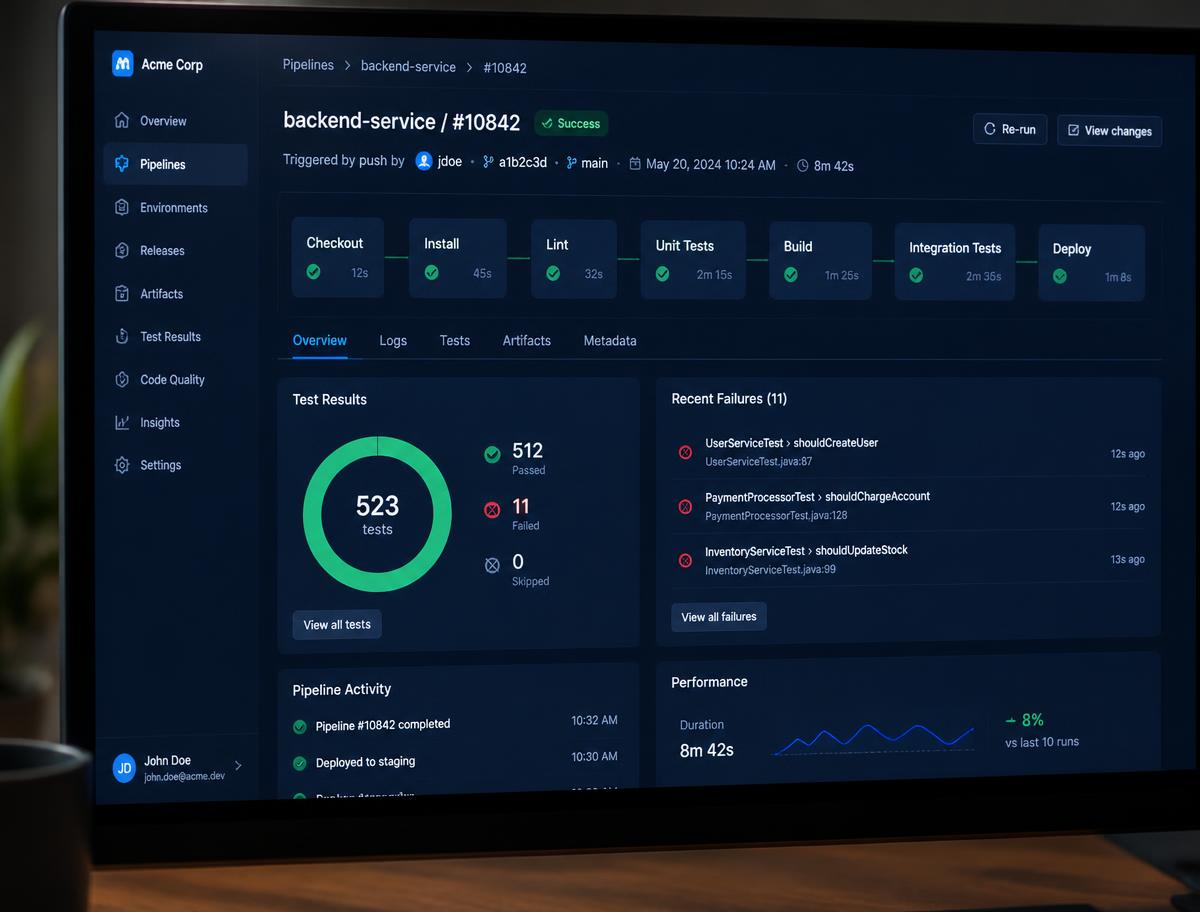
- Infrastructure defined as code, environment separation, container images, continuous integration and deployment, secret management, backups with tested restores, logging, metrics and alerting.
- Potential value
- Repeatable releases, an environment that can be recreated deliberately, earlier detection of faults, and a clear picture of what infrastructure exists and why.
07
Software modernisation
Incremental improvement of an existing system so it can be maintained and extended again.
- Business need
- For codebases that still work but resist change: outdated dependencies, no tests, unclear structure, or knowledge that left with a previous team.
- Typical work
- Structured review of code, data and deployment; a prioritised plan; characterisation tests around risky areas; dependency and platform upgrades; and staged replacement of components while the system stays in service.
- Potential value
- Reduced operational and security risk, restored ability to add features, and a decision made on evidence about whether to rebuild or continue.
08
Technical consulting
Independent input on architecture, technology choices, sequencing and delivery risk.
- Business need
- Helpful before a significant investment, during a difficult build, or when a team needs an outside reading of a proposal or an existing system.
- Typical work
- Review of documentation and code, conversations with the people involved, comparison of realistic options with their trade-offs, and a written summary with recommendations and open questions.
- Potential value
- Decisions supported by an explicit rationale, earlier visibility of risk, and a shared reference that reduces repeated debate later.
09
Quality assurance and optimisation
Verification that a system behaves as intended, and targeted work on the parts that do not perform adequately.
- Business need
- Applies where defects reach users repeatedly, where releases are feared, or where the application has become slow as data or usage has grown.
- Typical work
- Automated unit, integration and end-to-end tests; accessibility auditing; profiling of queries and page rendering; caching and indexing work; and load characterisation against realistic data volumes.
- Potential value
- A safety net that makes change affordable, fewer regressions in production, and performance improvements grounded in measurement rather than assumption.
10
Ongoing product support
Continuous maintenance and small-scale development after a system is live.
- Business need
- For organisations without an internal team to look after an application, or with a team that lacks capacity for maintenance alongside its own roadmap.
- Typical work
- Dependency and security updates, monitoring and alert response, defect correction, small feature work, periodic review of infrastructure cost and capacity, and updates to documentation.
- Potential value
- Software that stays current and healthy, problems addressed before they become outages, and a predictable route for incremental improvement.
Across every service
Practices applied regardless of the engagement
Version control and review
All work is committed, reviewed and traceable to the decision that prompted it.
Automated verification
Tests and checks run on every change, before anything reaches a shared environment.
Environment parity
Development, staging and production are defined from the same configuration source.
Documented handover
Setup, deployment and operational notes are written as the work proceeds.
Scope
What is deliberately not offered
Naming the boundaries early avoids wasted conversations and makes the rest of the scope more credible.
- Guaranteed rankings, revenue or performance figures
- Marketing campaign management or paid advertising
- Resale of third-party software licences
- Hardware procurement or on-site desktop support
- Work that requires misrepresenting facts to users
- Estimates given without a described scope
Enquiries
Discussing a service with WATER AND WOOD ATELIER LIMITED
A written description of the problem is the most useful starting point. Guidance on what to include is set out on the contacts page.
heidibrooks198461@gmail.com